
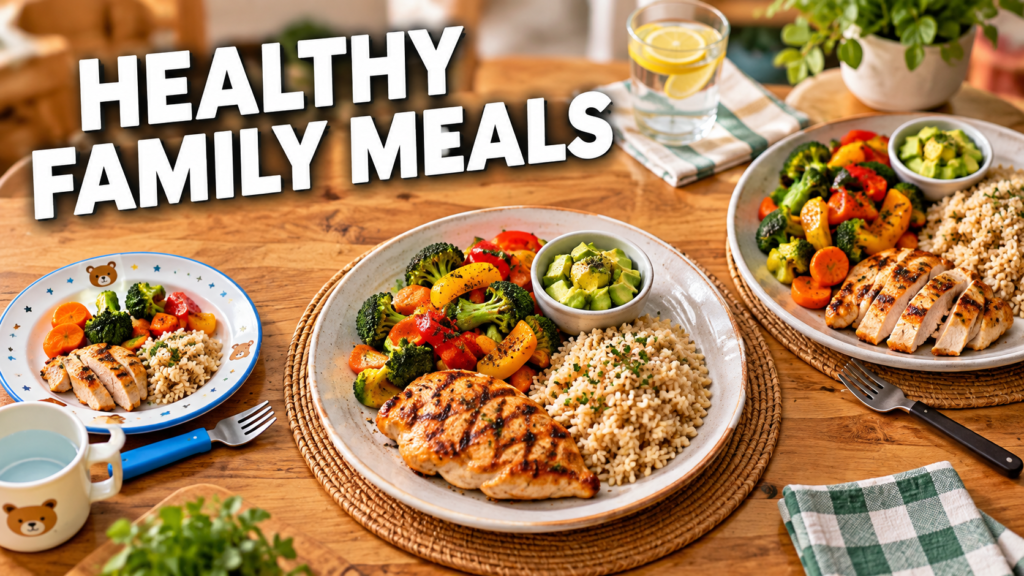
Getting a nutritious, home-cooked dinner on the table every night — one that a toddler, a teenager, and two tired adults will all actually eat — is one of the most common struggles busy parents describe. Between after-school schedules, work fatigue, picky eaters, and tight grocery budgets, “healthy” often gets pushed aside in favor of whatever is fastest.
The good news: healthy family meals don’t require gourmet skills, expensive ingredients, or hours in the kitchen. They require a simple, repeatable framework — one that balances protein, vegetables, whole grains, and healthy fats in a way that fits real family life.
This guide walks through what actually makes a family meal “healthy,” how to build balanced plates for different ages, budget-friendly and time-saving strategies, a full 7-day sample meal plan, food lists organized by protein type, and practical answers to the questions parents ask most — from feeding picky eaters to freezer meal prep.
Quick Answer
Healthy family meals combine a source of protein, vegetables (ideally covering half the plate), a whole grain or starchy vegetable, and a small amount of healthy fat — prepared simply, with minimal added sugar and sodium, and adapted in portion size for each family member’s age and needs. The healthiest family meals are also realistic: quick enough for weeknights, affordable enough for regular use, and flexible enough for picky eaters.
What Are Healthy Family Meals? (Definition & Explanation)
A healthy family meal is a meal that meets the nutritional needs of multiple age groups at once while remaining practical to prepare on a regular basis. Unlike a single-serving “diet meal,” a family meal has to work for a range of appetites, taste preferences, and nutritional requirements — from a toddler’s smaller, more frequent meals to a teenager’s higher energy needs to an adult’s maintenance calories.
Nutritionally, a healthy family meal generally includes:
- A protein source (animal or plant-based) to support growth, muscle maintenance, and satiety
- Vegetables and/or fruit, ideally making up roughly half the plate, for fiber, vitamins, and minerals
- A whole grain or starchy vegetable for sustained energy
- A small portion of healthy fat (olive oil, avocado, nuts) to support nutrient absorption and fullness
- Limited added sugar and sodium, particularly important for children’s developing taste preferences and long-term health habits
This framework mirrors the “balanced plate” approach used by dietitians and public health bodies worldwide — sometimes called the divided-plate method — which is easier for families to apply consistently than counting exact calories or macros.
Importantly, “healthy” does not mean restrictive. Healthy family meals still include familiar comfort foods — pasta, tacos, stir-fries, burgers — just built with more whole ingredients and better nutritional balance.
Why Healthy Family Meals Matter (Benefits)
Regular, balanced family meals offer benefits that extend beyond nutrition alone. Based on general nutrition science and public health guidance:
- Supports steady growth and development in children, since consistent access to protein, healthy fats, and micronutrients is linked to healthy growth patterns.
- Helps regulate energy and mood throughout the day, as balanced meals with protein and fiber slow digestion and reduce energy crashes compared to high-sugar, low-fiber meals.
- Builds long-term eating habits. Children who regularly eat balanced, varied family meals tend to develop broader food acceptance over time.
- Reduces reliance on highly processed convenience foods, which are often higher in added sugar, sodium, and refined starch.
- Strengthens family connection. Eating together — even a few times a week — is associated with more stable family routines and communication, according to family health research.
- Supports weight and metabolic health for adults, since balanced meals reduce overeating driven by blood sugar swings.
It’s worth setting realistic expectations: no single meal “fixes” health, and perfection isn’t the goal. Consistency over time — most meals being reasonably balanced — is what drives the benefits above.
Building a Balanced Family Plate: The Nutrition Science Explained
Understanding why the plate method works makes it easier to apply on busy nights without needing to calculate anything.
Protein (about a quarter of the plate): Protein slows gastric emptying, which helps everyone — kids included — feel satisfied longer and reduces snacking on less nutritious foods shortly after a meal. Protein is also essential for muscle repair, immune function, and in children, growth.
Vegetables and fruit (about half the plate): Vegetables provide fiber, which supports digestion and helps regulate blood sugar response, plus a wide range of vitamins (A, C, K, folate) and minerals (potassium, magnesium) that are harder to get from other food groups. Variety matters more than any single “superfood” — different colored vegetables generally supply different micronutrients.
Whole grains or starchy vegetables (about a quarter of the plate): Carbohydrates are the body’s primary energy source, particularly important for active children. Whole grains (brown rice, whole wheat pasta, oats) retain more fiber and micronutrients than refined versions, which supports more stable energy levels.
Healthy fats (small portion): Fats support the absorption of fat-soluble vitamins (A, D, E, K) and contribute to satiety. Sources like olive oil, avocado, nuts, and fatty fish also provide omega-3 fatty acids, which are commonly discussed in nutrition science for their role in heart and brain health.
Sodium and added sugar: These aren’t food groups to eliminate, but ingredients to be mindful of, particularly in packaged sauces, cereals, and processed meats — moderating them is more relevant to family health than any single “clean eating” rule.
Key Nutrients Every Family Meal Should Include
For a meal to genuinely support a whole family’s nutrition, dietitians typically look for these nutrients to be represented across the week, not necessarily every single meal:
| Nutrient | Why It Matters | Common Family-Friendly Sources |
|---|---|---|
| Protein | Growth, satiety, muscle repair | Chicken, eggs, beans, Greek yogurt, fish |
| Fiber | Digestion, blood sugar balance | Vegetables, whole grains, lentils, fruit |
| Calcium | Bone development (especially for kids) | Dairy, fortified plant milk, leafy greens |
| Iron | Energy, cognitive development | Lean beef, beans, spinach, fortified cereal |
| Omega-3 fats | Brain and heart health | Salmon, mackerel, walnuts, chia seeds |
| Vitamin C | Immune support, iron absorption | Citrus, bell peppers, broccoli, strawberries |
| Vitamin D | Bone health, immune function | Fortified milk, eggs, fatty fish, sunlight |
Rather than tracking each nutrient daily, aim for variety across the week — different proteins, different colored vegetables, and a mix of whole grains — which naturally covers most of these needs.
How to Plan Healthy Family Meals for Busy Weeknights
Time pressure is the single biggest barrier parents report when trying to cook healthy family dinners. A few structural habits make the biggest difference:
- Plan a weekly meal outline, not rigid daily recipes. Assign meal categories to days (e.g., “Meatless Monday,” “Sheet-pan Tuesday,” “Slow cooker Wednesday”) so decision fatigue is reduced without locking in exact recipes.
- Batch-prep components, not full meals. Cooking a large batch of rice, roasted vegetables, or grilled chicken on the weekend lets you reassemble different meals quickly through the week.
- Keep a rotating list of 10–15 “go-to” dinners. Families that repeat a familiar rotation of balanced meals report significantly less weeknight stress than those trying new recipes every night.
- Use one-pot and sheet-pan meals to cut both cooking and cleanup time.
- Lean on healthy convenience shortcuts (see the section below) rather than aiming for “from scratch” every night.
Budget-Friendly Healthy Family Meals
Eating well doesn’t require expensive specialty ingredients. Some of the most nutrient-dense foods — beans, eggs, frozen vegetables, oats — are also among the cheapest.
Ways to keep healthy family meals affordable:
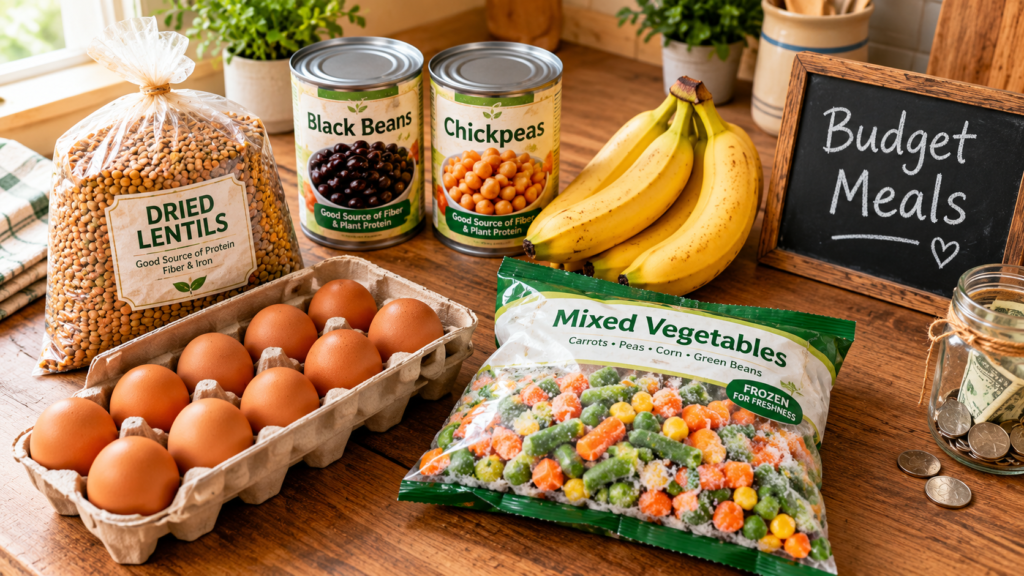
- Build meals around plant proteins several times a week. Beans, lentils, and chickpeas cost a fraction of meat while offering fiber and protein.
- Buy frozen vegetables and fruit. They’re picked and frozen at peak ripeness, so nutritionally they’re comparable to fresh — often more affordable and with less waste.
- Use canned staples strategically. Canned beans, canned tomatoes, and canned salmon or tuna are inexpensive, shelf-stable, and nutrient-rich.
- Buy proteins in bulk and portion/freeze them. Family packs of chicken thighs or ground beef are typically cheaper per pound than small packs.
- Plan meals around sales and pantry staples rather than deciding meals first and shopping after.
- Repurpose leftovers intentionally. Roast chicken becomes tomorrow’s chicken tacos or soup instead of being wasted.
Budget-Friendly Family Meal Ideas
- Lentil and vegetable soup — Lentils are cheap, high in fiber and plant protein, and bulk up easily with frozen vegetables.
- Bean and rice bowls — Canned beans plus rice make a complete, affordable protein-and-carb base.
- Egg fried rice with frozen peas and carrots — Eggs are one of the most affordable complete proteins available.
- Canned salmon patties — Budget-friendly source of protein and omega-3s, often cheaper than fresh fish.
- Vegetable and chickpea curry — Uses pantry staples (canned tomatoes, canned chickpeas) for a filling, low-cost dinner.
- Pasta with canned tomato and white bean sauce — Blends inexpensive pasta with fiber-rich beans for added protein.
- Baked potato bar — Potatoes are inexpensive and nutrient-dense; top with beans, cheese, and vegetables for balance.
- Frozen vegetable stir-fry with ground turkey — A quick, affordable way to use freezer staples.
- Homemade bean burritos — Beans, rice, and tortillas cost little and reheat well for leftovers.
- Oats-based breakfast-for-dinner (savory oats or egg muffins) — Oats and eggs are among the cheapest sources of fiber and protein.
Easy Healthy Family Dinner Ideas (Ready in 30 Minutes or Less)
For nights when time is the limiting factor, these easy healthy family meals rely on minimal steps, common ingredients, and one-pan or one-pot cooking.
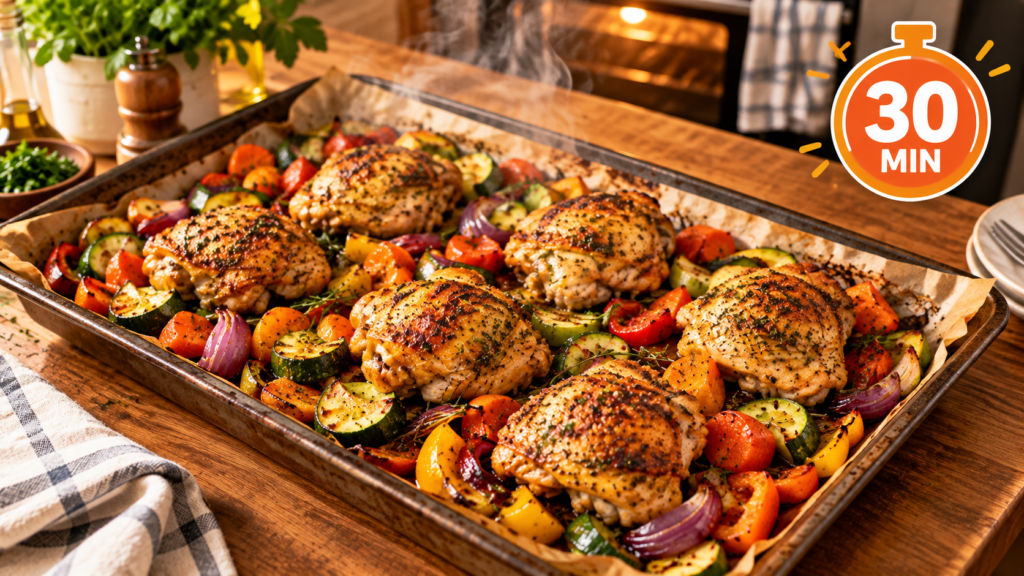
- Sheet-pan chicken and roasted vegetables — Balanced protein and vegetables cooked together with minimal cleanup.
- Turkey or beef taco bowls — Customizable for picky eaters; easy to add beans and vegetables.
- Shrimp and vegetable stir-fry — Shrimp cooks in minutes and pairs well with quick-cooking frozen vegetables.
- One-pot chicken and rice — A complete, balanced meal cooked in a single pot for easy weeknight cleanup.
- Veggie-loaded pasta with jarred marinara — A semi-homemade shortcut that still allows added vegetables and lean protein.
- Salmon with quick-roasted broccoli — Salmon cooks fast under the broiler and is rich in omega-3 fatty acids.
- Black bean quesadillas — A fast vegetarian option high in fiber and plant protein.
- Egg and vegetable fried rice — Uses leftover rice and whatever vegetables are on hand.
- Chicken fajita bowls — Sheet-pan or skillet method; easily deconstructed for picky eaters.
- Tuna or chickpea salad wraps — No-cook option for particularly time-crunched nights.
Healthy Family Meals by Protein: Chicken, Beef, Fish & Vegetarian Options
Rotating protein sources across the week helps ensure a broader range of nutrients — different proteins bring different amounts of iron, omega-3s, and B vitamins.
Healthy Chicken-Based Family Meals
- Chicken curry — Combines lean protein with spices and vegetables; easily adjusted for spice tolerance with kids.
- Chicken soup with vegetables — A nutrient-dense, easy-to-digest option, useful for lighter meals or when a family member is unwell.
- Chicken stir-fry — Fast-cooking and easily loaded with colorful vegetables.
- Chicken tacos — A customizable, family-style format that lets each person build their own.
- Chicken and rice bowls — A balanced, mild base that’s typically well-accepted by picky eaters.
- Chicken traybake with root vegetables — Minimal hands-on time with built-in vegetable servings.
Healthy Beef-Based Family Meals
- Lean beef tacos — Ground beef is a good source of iron and B12, important for growing children.
- Beef and broccoli stir-fry — Pairs iron-rich beef with vitamin C-rich broccoli, which supports iron absorption.
- Beef meatballs with whole wheat pasta — A familiar comfort meal that’s easy to fortify with hidden vegetables in the sauce.
- Beef and vegetable stew — A one-pot meal that’s freezer-friendly and nutrient-dense.
- Beef rice bowls — Lean beef, rice, and quick-pickled or roasted vegetables for a balanced bowl meal.
Healthy Fish & Seafood Family Meals
- Baked salmon — Rich in omega-3 fatty acids, which are commonly under-consumed in children’s diets.
- Fish tacos (cod or tilapia) — A milder, family-friendly way to introduce fish.
- Fish cakes — Combining fish with potato can make texture more approachable for picky eaters.
- Shrimp and vegetable skewers — Fast-cooking and naturally kid-sized in portion.
- Tuna pasta bake — An affordable way to include omega-3-rich fish in a familiar comfort format.
Healthy Vegetarian Family Meals
- Lentil curry — High in plant protein and fiber; freezes well for meal prep.
- Vegetarian chili with beans — A filling, protein-rich meal that’s easy to batch cook.
- Chickpea and vegetable bowls — A complete plant-based meal with fiber and protein.
- Tofu stir-fry — A versatile protein source that absorbs sauce flavors well, helpful for picky eaters.
- Veggie burgers with whole grain buns — A familiar format that makes plant-based eating approachable for kids.
Meal Prep & Freezer-Friendly Family Meals
Meal prep reduces weeknight decision fatigue and helps ensure healthier defaults are already available when time is short.
Core meal prep strategies for families:
- Batch-cook proteins (grilled chicken, ground turkey, roasted beans) at the start of the week to mix into different meals.
- Prep vegetables ahead — washing, chopping, and storing vegetables makes them far more likely to be used on busy nights.
- Cook grains ahead — a large batch of rice or quinoa can be portioned and reheated across several meals.
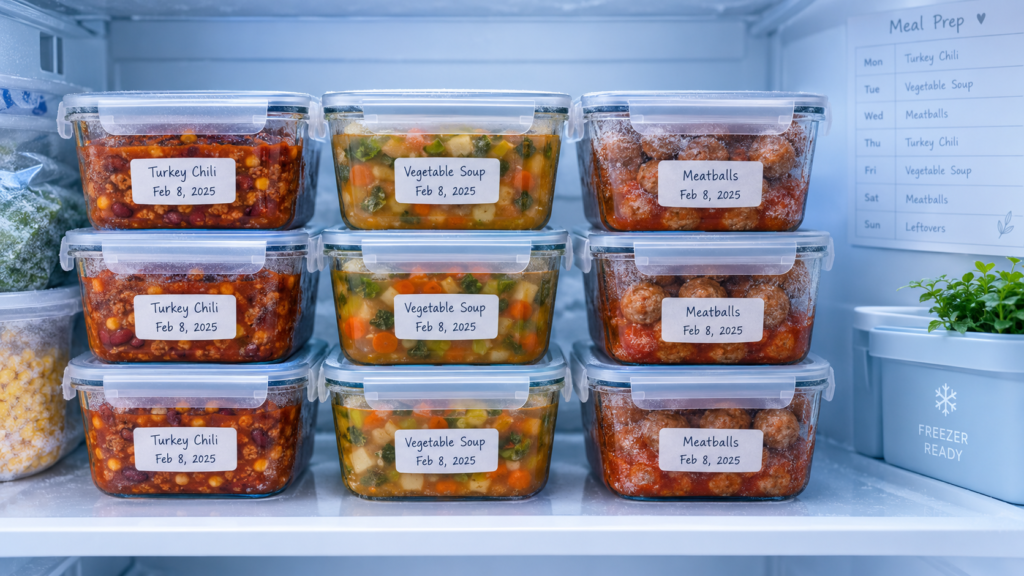
- Double a recipe and freeze half. Soups, stews, casseroles, and meatballs generally freeze and reheat well.
- Use freezer-friendly labeling (contents + date) to keep a rotating, usable freezer stock rather than a freezer of mystery containers.
- Build a “freezer meal” list of 5–6 reliable recipes the family regularly eats, so freezer stocking has purpose rather than becoming random.
Freezer-Friendly Meal Ideas
- Turkey or beef chili — Freezes and reheats well without losing texture.
- Vegetable and lentil soup — A nutrient-dense, freezer-stable option for busy weeks.
- Baked ziti or pasta bake — Can be assembled, frozen unbaked, then cooked directly from frozen.
- Chicken and vegetable casserole — A balanced, complete meal in a single freezer-friendly dish.
- Meatballs (beef, turkey, or chicken) — Freeze well individually for flexible portioning.
- Burritos (bean or chicken) — Wrap and freeze individually for grab-and-reheat lunches or dinners.
- Shepherd’s pie — A make-ahead classic that reheats well from frozen.
Healthy Meals for Picky Eaters and Kids
Feeding a family with different taste preferences — especially toddlers and picky eaters — is one of the most common challenges parents raise. A few evidence-informed, behavior-focused strategies can help.
Practical approaches for picky eaters:
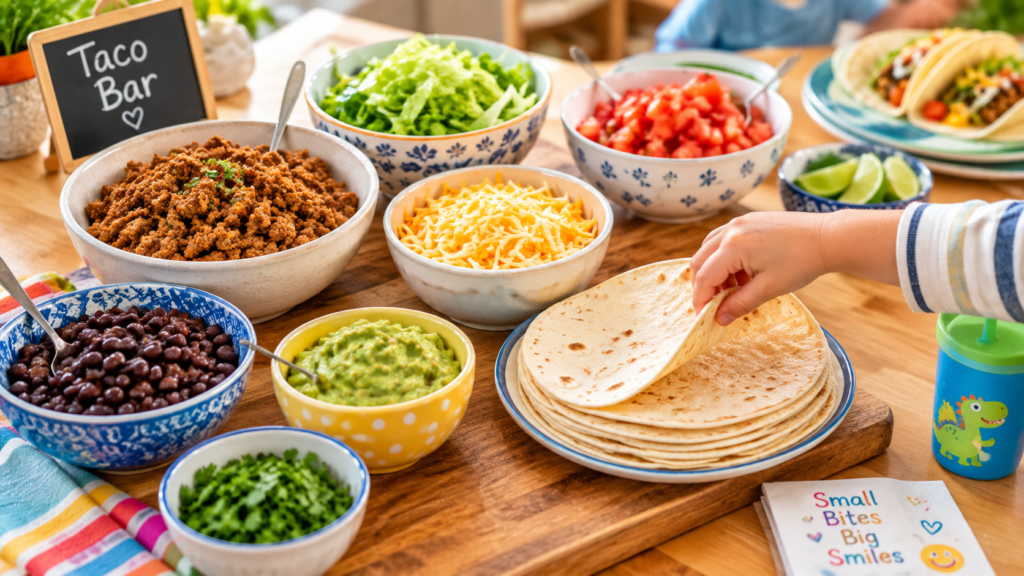
- Serve family-style, hands-on meals. Letting kids build their own tacos, bowls, or wraps increases their willingness to try new foods, since it gives them a sense of control over the meal.
- Pair one new food with familiar foods, rather than serving an entirely new meal at once.
- Avoid pressure or bribery around vegetables. Research on child feeding generally suggests that repeated, low-pressure exposure is more effective long-term than forcing bites.
- Offer the same healthy meal to the whole family rather than making separate “kid meals” — this normalizes the food as simply what the family eats.
- Incorporate “hidden” vegetables thoughtfully (blended into sauces or baked goods) as a supplement to visible vegetables, not a replacement for offering them directly.
- Keep a small rotation of “safe” foods available alongside new foods, so mealtime doesn’t become a source of stress for the child.
- Expect it to take multiple exposures. It’s common and normal for children to need to see a food many times before accepting it.
Kid-Friendly Healthy Meal Ideas
- Build-your-own taco bar — Interactive format that increases willingness to try toppings.
- Mini chicken meatballs with pasta — A familiar shape and texture that’s easy for small hands.
- Veggie-loaded mini muffins or fritters — A hands-on format that incorporates vegetables discreetly.
- Grab-and-dip plates (vegetables, hummus, cheese, fruit) — Removes pressure by letting kids choose their own combinations.
- Homemade fish sticks (baked, not fried) — A familiar format with better nutritional value than store-bought versions.
- Rice and bean bowls with mild seasoning — Simple, customizable, and generally well-tolerated by toddlers.
Sample 7-Day Healthy Family Meal Plan
This plan illustrates how to apply the balanced-plate framework across a week using a mix of proteins, budget-friendly staples, and quick options. Portions should be adjusted based on age, appetite, and activity level — toddlers need much smaller portions than teenagers or adults.
| Day | Dinner | Balance Notes |
|---|---|---|
| Monday | Sheet-pan chicken and roasted vegetables with brown rice | Lean protein + fiber-rich vegetables + whole grain |
| Tuesday | Vegetarian chili with beans, served with cornbread | Plant protein + fiber; budget-friendly |
| Wednesday | Baked salmon with quick-roasted broccoli and quinoa | Omega-3s + vitamin C + whole grain |
| Thursday | Turkey taco bowls (build-your-own) | Lean protein + customizable vegetables for picky eaters |
| Friday | One-pot chicken and rice with peas and carrots | Simple, low-cleanup, balanced macro mix |
| Saturday | Beef and broccoli stir-fry over brown rice | Iron-rich protein + vitamin C for absorption |
| Sunday | Lentil and vegetable soup with whole grain bread | Fiber-rich, freezer-friendly, plant-based |
General portion guidance (approximate, per meal, adjust to individual needs):
- Toddlers (1–3 years): 1–2 oz protein, 2–4 tbsp vegetables, 2–4 tbsp grains
- Children (4–8 years): 2–3 oz protein, ½–¾ cup vegetables, ½ cup grains
- Older children/teens: 3–4 oz protein, 1 cup vegetables, ¾–1 cup grains
- Adults: 3–5 oz protein, 1–1.5 cups vegetables, ¾–1 cup grains
These are general starting points, not clinical prescriptions — appetite naturally varies day to day, especially in children, and forcing exact portions is not recommended.
Foods to Prioritize vs. Foods to Limit
Foods to Prioritize Regularly
- Vegetables and fruit (fresh, frozen, or canned without added sugar/salt)
- Lean proteins (chicken, turkey, fish, eggs, beans, lentils, tofu)
- Whole grains (brown rice, oats, whole wheat pasta and bread, quinoa)
- Healthy fats (olive oil, avocado, nuts, seeds, fatty fish)
- Dairy or fortified alternatives (for calcium and vitamin D)
Foods to Limit (Not Eliminate)
- Highly processed meats (frequent hot dogs, sausages) — higher in sodium and saturated fat
- Sugary drinks and juices — contribute added sugar with minimal nutritional benefit
- Heavily breaded/fried convenience foods — often high in refined starch and sodium
- Excess added sugar in cereals, sauces, and snacks — check labels rather than assuming
- High-sodium packaged sauces and instant meals — can be used occasionally, balanced with fresh vegetables
The goal isn’t to eliminate any of these entirely — an occasional treat or convenience meal fits within an overall healthy pattern. Consistency across the week matters more than any single meal.
Common Mistakes Families Make with Healthy Eating
- Making separate meals for kids and adults. This adds cooking burden and can reinforce picky eating rather than reduce it.
- Aiming for perfection instead of consistency. Skipping “healthy” entirely after one less-balanced meal is more disruptive than simply returning to balance at the next meal.
- Relying too heavily on packaged convenience foods without balancing them with fresh vegetables or fruit.
- Under-portioning vegetables because they’re assumed to be “extra” rather than a core part of the plate.
- Using pressure or bribery (“finish your vegetables and you can have dessert”) which nutrition and feeding research generally associates with reduced long-term acceptance of the pressured food.
- Not involving kids in meal prep, missing an opportunity shown to increase willingness to try new foods.
- Skipping protein at breakfast, which can contribute to energy dips and increased snacking later in the day.
Common Myths About Healthy Family Meals
Myth: Healthy meals have to be made entirely from scratch.
Fact: Convenience shortcuts — frozen vegetables, canned beans, jarred sauces — can be part of a nutritionally balanced meal. What matters most is the overall composition of the plate, not whether every component was made from raw ingredients.
Myth: Kids need separate, “kid-friendly” meals to eat well.
Fact: Offering the same meal to the whole family (in adjusted portions) is generally recommended, as it normalizes a wider variety of foods rather than reinforcing a narrow “kid menu.”
Myth: Carbohydrates should be minimized for a “healthy” meal.
Fact: Whole grains and starchy vegetables are an important energy source, particularly for growing children and active families. The concern is more about the type (refined vs. whole) than the presence of carbohydrates.
Myth: Fresh produce is always more nutritious than frozen or canned.
Fact: Frozen and canned vegetables and fruit (without added sugar or sauce) retain most of their nutritional value and can be more practical and affordable for regular use.
Myth: One unhealthy meal “ruins” a healthy eating pattern.
Fact: Overall dietary patterns over days and weeks matter far more than any single meal.
Medical Disclaimer
This article is for general informational and educational purposes only and does not constitute medical or nutritional advice for any individual. Nutritional needs vary based on age, health status, allergies, medical conditions, and other individual factors. Before making significant changes to your or your child’s diet — particularly if you or a family member has a medical condition, food allergy, growth concern, or is pregnant or breastfeeding — please consult a registered dietitian, pediatrician, or other qualified healthcare provider.
Evidence & Sourcing Note
The nutrition principles referenced in this article (the balanced-plate model, macronutrient roles, general benefits of fiber and omega-3 fatty acids, and child-feeding approaches such as reduced pressure around new foods) reflect widely accepted, general nutrition science and public health guidance. Specific statistics or studies have not been cited by name in this draft; any claim requiring a precise figure or named study should be verified and sourced by a qualified reviewer before publication.
Why Trust This Guide
This guide was developed using established, general nutrition science principles — including the balanced-plate/plate-method framework commonly used by dietitians, general child-feeding research on picky eating, and widely accepted public health guidance on macronutrients and food groups. It was written to prioritize practical, realistic guidance over restrictive or trend-based advice, and to clearly flag where individual medical guidance is needed. It does not replace personalized advice from a registered dietitian or healthcare provider, who can account for your family’s specific health needs, allergies, and circumstances.
Frequently Asked Questions
What are healthy family meals?
Healthy family meals are meals that balance protein, vegetables, whole grains, and healthy fats in portions appropriate for each family member’s age, while limiting excess added sugar and sodium. They don’t need to be elaborate — simple, repeated balanced meals are effective.
What should I make for family dinner tonight?
A quick, balanced option is a sheet-pan or one-pot meal — such as chicken and roasted vegetables, or a bean and rice bowl — which requires minimal prep and naturally covers protein, vegetables, and a whole grain.
How do I get kids to eat vegetables?
Offer vegetables regularly and without pressure, pair them with familiar foods, involve kids in preparation, and expect it may take multiple exposures before a new vegetable is accepted. Family-style, hands-on meals (like taco bars) also tend to increase willingness to try new foods.
What are healthy meals for picky eaters?
Meals that offer a familiar base (like rice, pasta, or tortillas) alongside customizable toppings work well, since they let picky eaters build a plate they’re comfortable with while still being exposed to new foods.
How can I make healthy family meals on a budget?
Prioritize plant proteins like beans and lentils, use frozen and canned vegetables, buy proteins in bulk and freeze portions, and plan meals around pantry staples and sales rather than deciding recipes first.
What are good freezer-friendly family meals?
Chili, soups, casseroles, meatballs, and burritos generally freeze and reheat well, making them practical for batch cooking and busy weeknights.
How do I meal plan for a family with different tastes?
Build meals with a customizable format (bowls, tacos, build-your-own bars) so each person can adjust toppings and portions while everyone eats the same core, balanced meal.
Are frozen vegetables as healthy as fresh?
Yes, generally — frozen vegetables are typically frozen at peak ripeness and retain most of their nutritional value, making them a practical, affordable option for regular use.
What are quick healthy family dinners for busy weeknights?
One-pot meals, sheet-pan dinners, and stir-fries are among the fastest options, typically taking 30 minutes or less while still delivering a balanced plate.
How often should families eat together?
There’s no strict rule, but eating together even a few times a week is generally associated with more consistent family routines; the exact frequency should fit what’s realistic for your family’s schedule.
Author / Content Trust Note
This guide was researched and written using established general nutrition science, public health dietary guidance, and widely recognized child-feeding principles. It was created as original content, not copied or paraphrased from other sources. All nutrition information reflects general, evidence-based guidance rather than personalized medical advice — always consult a registered dietitian, doctor, or other qualified healthcare provider for guidance specific to you or your family’s needs.